Most people buy a serving board the way they buy a chopping board: square-ish, as big as they can store, and ready for anything. Then it comes out twice a year, because it is too wide for the table and too heavy to pass around.
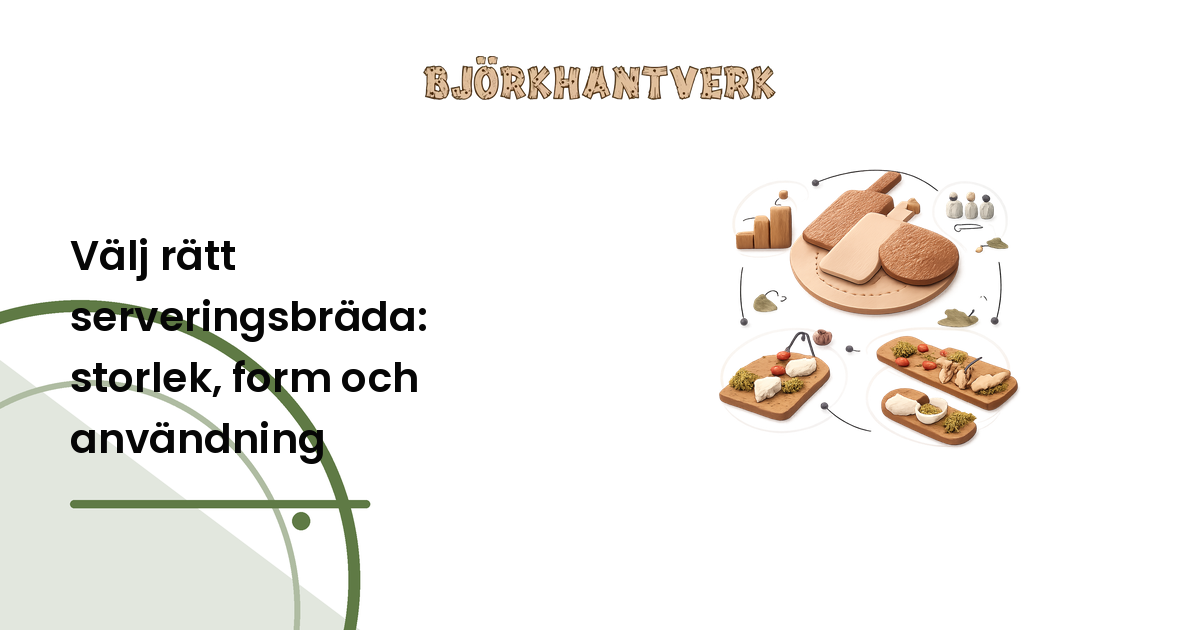
The takeaway up front: a serving board is judged at the table, not at the worktop. What matters is whether it fits down the middle of the table with plates either side, whether one person can lift it loaded, and whether it looks good with food on it and nothing else. That usually means long and slim rather than broad and square.
A serving board is a different object
A chopping board has one job: to be cut on. It wants mass, stability and a surface that forgives a knife. Those are exactly the qualities that make it awkward on a table — it is heavy, it is wide, and it tends to look like a tool.
A serving board is carried, set down among glasses, and handed along. It is looked at for as long as it is used. So the priorities flip: weight, proportion and the look of the wood move to the front, and knife-friendliness drops to the back. You might slice a loaf on it, but you are not breaking down a chicken.
That is why a good serving board is often thinner and narrower than you expect.
Length beats width
Picture a dinner table with plates laid on both sides. The free space is a strip down the middle — long, and not very wide. A board that fits that strip can sit there for the whole meal without anyone moving a glass. A broad square board cannot; it either crowds the plates or ends up on a side table, which defeats the point.
This is why long, narrow boards are so common for serving. Björkhantverk's slim birch serving board is roughly 63 centimetres long and 14 wide — proportions chosen for exactly that strip down the table, and light enough to pass hand to hand.
A practical test before you buy: measure the gap down the middle of your table with the plates out. Buy a board that fits inside it.
Why birch suits serving
Birch is a pale, fine-grained hardwood with very little figure. On a serving board that restraint is the point — it sets off food instead of competing with it. Dark cured meats, a wedge of blue cheese, a bright pile of fruit: all of it reads clearly against pale birch.
It is also dense and takes a smooth finish that stays smooth, so a board that is mostly carrying food rather than being cut on keeps its crisp look for years. The comparison with pine is covered in more depth in birch or pine; the short version is that birch wins where appearance and a fine surface matter most.
Matching the board to the food
Cheese and charcuterie. The classic use, and the one where a long board shines. Lay things out in a line so everyone can reach something without passing the board. Leave space around soft cheeses so they do not run into each other.
Bread. A serving board doubles well as a bread board — cutting a loaf at the table is gentle work that a hardwood handles easily. Crumbs are the only real cost.
A shared main. A whole fish, a roast, grilled vegetables laid out long. This is where length pays off again: food that is long travels well on a board that is long.
Small plates. A board makes a natural tray for several small bowls, keeping a spread of dips or sides together and easy to move.
One thing to keep off it: anything wet and acidic left sitting for a long time. Pickles, dressed salad and cut citrus are fine to serve, but do not leave pools standing on the wood. Wipe it once the meal is done.
Looking after it
A serving board sees much less water than a chopping board, so it asks for less — but the same rules apply. Wash it by hand, dry both faces, and stand it on its edge to dry. Never put it in the dishwasher and never leave it soaking.
Oil it when it starts to look pale, which for a serving board may only be every couple of months. The routine is the same as for any wooden board and is set out step by step in how to oil a wooden cutting board. A board that is fed and dried properly will stay good for a very long time.
As a gift
A serving board is one of the easier wooden things to give well, because it does not depend on how the recipient cooks. A heavy end-grain chopping block is wonderful for someone who cooks seriously and has the counter space; a serving board suits almost anyone with a table.
If you are choosing for someone else, the same rule holds: long and light beats wide and heavy. It is more likely to come out of the cupboard.
Frequently asked questions
Can I cut on a serving board? Yes, lightly — slicing bread or cheese at the table is fine. It is not built for heavy chopping, and a board that is mostly used for serving will look better for longer if you keep the serious knife work on a chopping board.
What size serving board should I buy? Measure the free strip down the middle of your table with the plates laid out, and choose a board that fits inside it. For most tables that points to something long and narrow rather than broad.
Is a wooden serving board hygienic? Wood is a long-established food surface. Wash it by hand, dry it fully and upright, and do not leave wet food standing on it. Those habits matter more than the material.
How often does a serving board need oiling? Less often than a chopping board, because it sees less water. Oil it when the wood starts to look pale or dry — for many serving boards that is every month or two.
The serving boards — serveringsfat — sit alongside the cutting boards at bjorkhantverk.se, in birch and pine.
About the author — Björkhantverk makes cutting boards, serving boards and wooden butter knives by hand from birch and pine in Hälsingland, Sweden.